

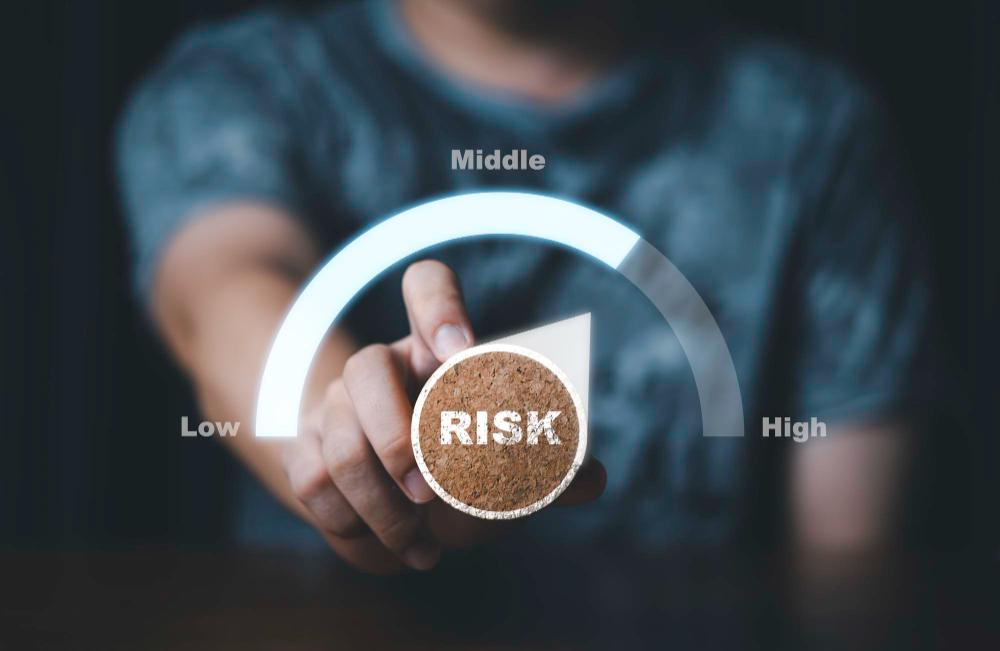
I am loving this term called Risk Appetite. No risk, no venture! Are you money hungry or cash hungry? They both are different.
The term risk appetite belongs in financial industry. However, this term is co-relating in real estate and construction industry as well.
In this article we are trying to understand the term Risk Appetite through asking questions in different manner. Once we completely understand the term; we will answer all questions ourselves by using common sense. Yes, sometimes, you need a consultant to answer specific questions. Nonetheless, as an investor, you are responsible for your homework.
We will talk about:
In simple English, following questions should come up in your mind.
Although, all these questions are directly related to any financial institution; but they are related to any single investor.
First thing, investment in real estate is investing liquid cash. Real estate investment is always cash hungry.
There are several factors that influence risk appetite.
Understand your home and company culture. The investment will directly impact household and employees. You may have to cut down some expenses, remove wants and focus on the priorities and needs only. Calculate each and every expense you can think when investment is going to start.
I wrote an article earlier about this. Please read and click on Types of Cost in Real Estate. Real estate requires huge liquid cash investment.
A famous MBA analysis on SWOT which stands for Strength, Weaknesses Opportunities, and Threats analysis should be done before the investment.
Nevertheless, the SWOT analysis is also done when a real estate is in construction phase. Sometimes, the material price may go up while constructing your house. The economic situation may go down. You may have to increase the security to keep out the looters and hoodlums. Keeping safety while labours are on site and keeping safe the material so that it is not stolen. Insurance plays a major part at this point.
Sometimes; you have to stop the construction and play delay tactic. An investor must understand who are the contractors in Pakistan? How much experience they have in construction? What electric and plumbing materials are they going to use? What about other material? How can contractor save money?
The investor does not stop investment when the house is constructed. Now, you need monthly maintenance on your newly constructed home sweet home.
You need to calculate and gather all the expenses you can incur on a monthly basis.
For example…
Are you scared enough to not to invest in real estate? Do you understand the risk hungry investment?
I hope you do. After all, no risk, no venture!
Who are your competitors when investing in real estate? An investor is the self-competitor in investing in real estate. Oh, how is that possible?
You are directly competing with your mindset and your consistent liquid cash investment in real estate when needed to finish the project.
Then you are competing with your relatives and your neighbours in terms of lifestyle.
What lifestyle do you need as an individual? Have you ever wondered why people migrate to other countries? Is it because of money or lifestyle? That’s something to ponder on. So, what exactly is risk appetite?
It is simply the amount of investment that you can risk in construction of a house very easily.
Risk tolerance is simply doing something different from the usual way of constructing.
For example, your risk appetite for normal quality steel rebar is PKR 100.00 but you need to upgrade your steel rebar for PKR 50.00 when normal quality can do the job.
The upgrade cost on the building material is your risk tolerance.
Now, your cost becomes PKR 150.00.
You accepted this deviation (change) as this upgrade satisfies your future planning.
Again, any change in the actual planning is risk tolerance.
I would say risk tolerance is an emergency fund that you keep for urgent basis.
Unacceptable risk would be if your upgrade cost (risk tolerance) is associated with another cost. This another cost may not your personal need; but it is indirectly a need of the upgrade cost.
For example, a bigger truck is needed to move building material which is oversize; an insurance is required to move this oversize material; city permit cost is required to move this oversize material.
Here comes your project manager who can save you money in handling all this.
You have to manage all investment risks through risk management system. You may use technology and will assist you easily or you can simply use your common sense.
Whatever you do; make sure you put every financial and non-financial transaction in writing.
That’s the simplest way of managing any risk.
The question arises that how a person (a real estate investor) in Pakistan will use technology in risk management system?
For example:
An investor is always at a risk when investing cash. Their family members are also at risk and this could have a ripple effect on other entities.
Personal and corporate investment after Covid-19 is not easy at all. The inflation in 2023 and beyond in Pakistan at all industry level is all time high. The standard of living is not improving.
An average Pakistani is facing an economic hardship. I would say, Pakistanis are a true risk manager at all levels. They are street smart, curious and can easily manage their funds.
 Marketplace
 Jobs
Jobs Chokidar
 Crew
Crew QA Session
 Social Network